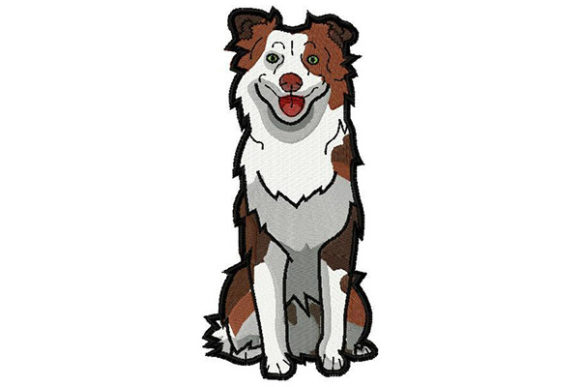
Reviewing the Good Boy Australian Shepherd Sitting Design
As a designer who has spent countless hours digitizing and testing machine embroidery patterns, I have learned that not every cute concept translates well into thread. When I first loaded the Good Boy Australian Shepherd Sitting design onto my hoop, I was looking for more than just aesthetic appeal. I wanted to know if it held up under the needle, how it behaved on different textiles, and whether it offered the versatility required for a modern craft business. After putting this file through its paces on various projects, from sturdy tote bags to delicate baby items, I have formed a clear opinion on its utility for serious makers.
First Impressions and Visual Personality
The immediate charm of this embroidery design lies in its posture. The sitting position of the Australian Shepherd conveys a sense of calm obedience and warmth, which is exactly what customers look for in personalized pet merchandise. The layout is balanced, avoiding the common pitfall of excessive width that can distort on narrower garments. Visually, the design captures the breed’s characteristic alertness without relying on overly complex micro-details that might get lost in production.
For an Etsy seller or boutique owner, visual clarity is currency. This design offers a strong silhouette that remains recognizable even from a distance. The interplay between the expected satin stitch borders and the internal fill stitch textures creates a dimensional look that elevates the perceived value of the finished product. It does not look flat; it looks like a crafted piece of art, which is essential for maintaining high price points in a competitive market.
Real-World Application: The Custom Tote Test
To truly evaluate the Good Boy Australian Shepherd Sitting pattern, I moved beyond digital mockups and started stitching. My primary test case was a heavy-canvas tote bag design intended for a local farmer’s market vendor who specializes in pet accessories. Canvas is unforgiving; it shows every puckering issue and highlights poor tension control.
I paired the design with a high-cut tear-away stabilizer to support the dense areas of the dog’s coat. The result was impressive. The design sat cleanly on the textured surface without sinking in. The thread colors I selected—rich merle blues and crisp whites—popped against the natural beige fabric. This experience confirmed that the design is robust enough for utilitarian items that will see frequent use and washing. It is not just a decorative accent; it is a durable branding element for a small shop product.
Versatility Across Product Lines
Beyond totes, this machine embroidery design shines in several other categories. For sweatshirt embroidery, the sitting pose fits perfectly on the left chest or as a larger back piece. The proportions are friendly to standard hoop sizes, meaning you do not need specialized large-format machines to produce professional results. I also tested it on a terrycloth kitchen towel. Here, the advice to "use proper stabilizers depending on the fabric used" becomes critical. Without a cut-away stabilizer, the loops of the towel can distort the fine lines of the dog’s ears. With the right backing, however, it makes for a charming holiday gift or housewarming present.
For those creating custom apparel, such as T-shirts, the design’s density must be respected. On thinner jersey knits, I recommend using a lightweight fusible interfacing alongside your stabilizer to prevent the fabric from pulling during stitching. This ensures the Australian Shepherd retains its shape and does not warp after the hoop is removed.
Technical Considerations for Designers
While the design is user-friendly, it requires thoughtful execution. One area where I exercise caution is with very small hoop sizes. If you are attempting to scale this down for a embroidered patch or a cap front, you must check the stitch density. High-density fills can become stiff and may cause the fabric to pucker if the design is reduced too much. Always run a test stitch on scrap fabric of the same type you intend to use for the final item. This simple step saves hours of frustration and prevents wasted materials.
Another practical note concerns dark fabric backgrounds. If you are stitching this on a black or navy garment, consider using an underlay or a white base layer if your digitizing software allows, or simply choose high-contrast thread colors. The design’s details rely on light and shadow created by the stitch direction. On dark fabrics, low-contrast threads can make the image look muddy. Testing in black and white mockups before threading your machine can help you visualize how the values will translate.
Commercial Viability and Brand Consistency
For commercial embroidery professionals, consistency is key. The Good Boy Australian Shepherd Sitting file comes in multiple embroidery file formats, which is a significant advantage. It allows you to load the design directly into most major machine brands without needing conversion software that might alter stitch paths. This reliability builds trust with clients who expect precise replication across multiple orders.
When building a brand around Dogs and Embroidery, having a versatile asset like this allows for cohesive marketing. You can use the same design on a baby embroidery onesie, a pillow cover, and a dog’s jacket, creating a unified product line. This cross-product consistency strengthens brand recognition and encourages customers to purchase multiple items. Furthermore, the emotional connection people have with their pets means that well-executed designs like this one often lead to higher customer engagement and social media shares, providing free marketing for your craft business.
Final Verdict for Makers
In conclusion, the Good Boy Australian Shepherd Sitting is a solid addition to any designer’s library. It balances artistic charm with technical practicality. It is not merely a cute image; it is a functional design asset that performs well across a variety of textiles when handled with care. Whether you are a hobbyist making a personalized gift for a friend or an Etsy seller scaling up production, this design offers the reliability needed for professional results.
Remember to respect the fabric you are working with. Use the appropriate stabilizer, test your tension, and verify your hoop size compatibility before starting your final piece. By treating this digital embroidery file with the technical respect it deserves, you will create handmade products that not only look beautiful but stand the test of time. It is a reliable choice for anyone looking to add a touch of canine warmth to their embroidery project portfolio.